
Why Smarter Websites Ask Fewer, Better Questions
A website feels intelligent when it remembers what is already clear and asks only for the missing detail that will actually change the next step.
Quick answer
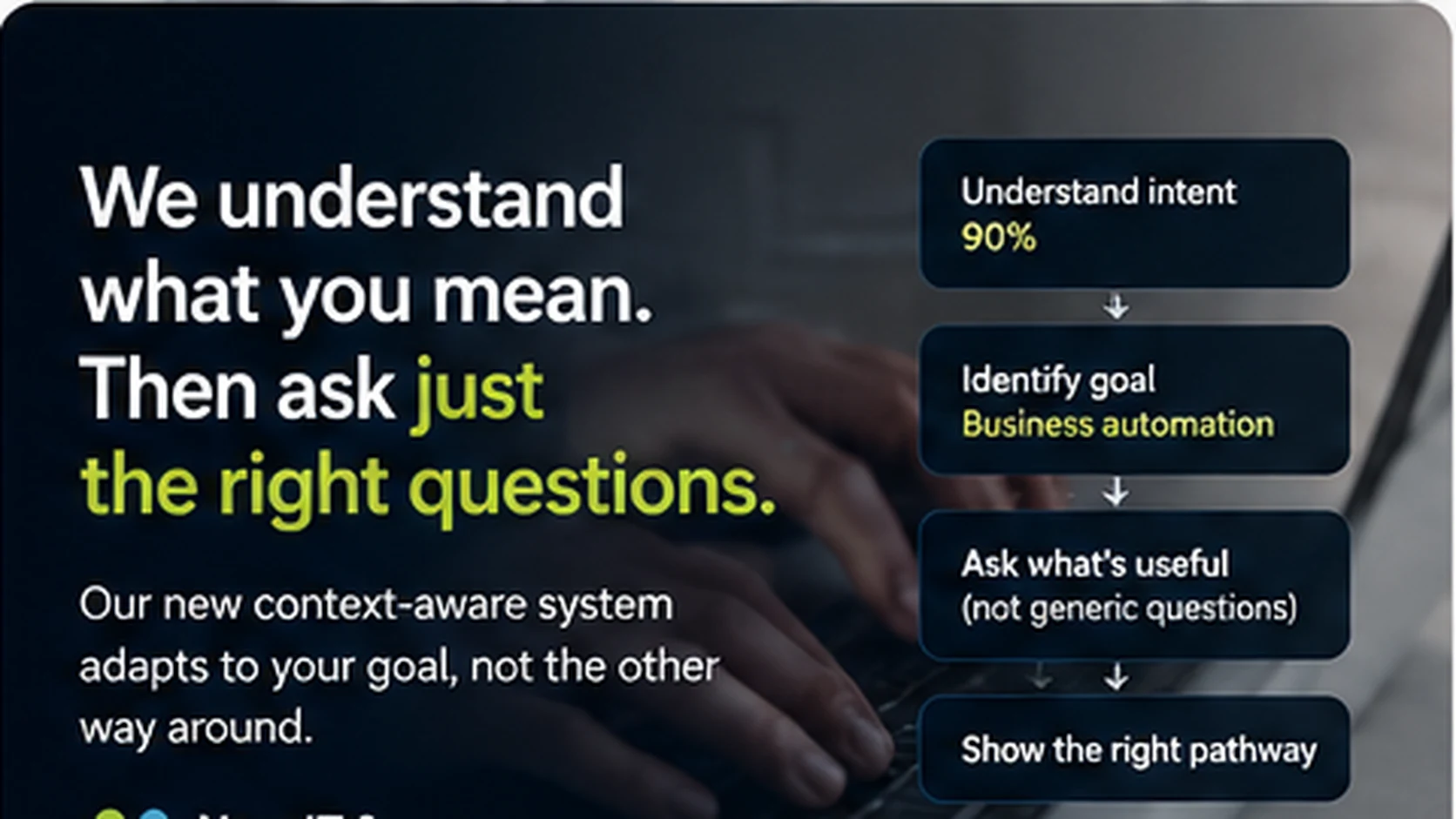
Good clarification is not about asking more questions. It is about asking the one missing question that changes the route, price guidance, support option or next action.
Why this matters
This guide explains one part of the intent-driven customer journey we use on Your IT & Tech Mates and how the same design principle can help other service businesses reduce confusion while keeping important actions under customer and human control.
The problem with generic forms
Traditional forms often ask the same fixed questions no matter what the customer already explained. That can make a smart-looking website feel frustrating because the customer has to repeat information that is already obvious.
Use what the customer has already told you
If someone asks how much a laptop screen replacement costs, the website should not ask whether the problem is the screen. A more useful next question might be the device type or model because that information can change the pricing guidance.
Business questions should be different from repair questions
A business owner describing repetitive invoice work should not receive a checklist about power, batteries and Wi-Fi. Once the business problem is clear, the website can ask whether the goal is automation, better follow-up, shared files or a review with someone.
Intent precedence prevents confusing routes
Words such as “quote” and “follow-up” can mean different things. “I want to follow up on my quote from you” is an existing-customer journey. “Our quotes get forgotten and customers do not respond” is a business workflow problem. Context should decide which meaning wins.
A simple rule: ask only when the answer matters
Before adding a question, ask whether the answer will change the next step. If not, remove it. This principle works whether the website uses AI, deterministic rules or a mixture of both.
Frequently asked questions
What is context-aware clarification?
It means the website uses what is already known about the request before deciding whether another question is necessary.
Will customers still see forms?
Yes, where forms are useful. The improvement is that the form or prompt can avoid asking for information that has already been provided.
Does this require a chatbot?
No. Context-aware clarification can sit behind ordinary website inputs, forms and guided actions.
Can the website get the meaning wrong?
Yes, which is why important actions remain customer-controlled and ambiguous requests can still be clarified.
How this fits with Intent Intelligence
Intent Intelligence is most useful when it removes friction rather than adding another layer of technology for the customer to manage. The website can understand the likely need, show reviewed options and preserve context, while QuoteMe and the normal business processes remain responsible for real requests and commitments.
Could your website make this journey simpler?
See how customer intent, workflow automation and human-reviewed website logic can fit around the systems your business already uses.